Managers who understand their people.
Managers may know the results their teams achieve without always knowing how each person prefers to prepare, decide and contribute. Sariio gives colleagues a way to describe those preferences, compare perspectives by mutual choice and discuss what support would help.
Free for individuals. Partners and organisations subscribe. .
What do the results leave unexplained?
Performance, retention and employee feedback can point to questions worth exploring. Work preferences add one perspective: how people say they prefer to approach a task and work with others. Discuss that alongside workload, pay, systems and management practice before deciding what to change. Preferences alone do not explain the results or establish a cause.
Explore hiring, onboarding and everyday management.
A successMAP describes the preferences of people in a role. Use it to discuss expectations with candidates and new starters alongside skills, experience and the demands of the job. A preference match is not a prediction of performance or retention.
A personal myMAP can help a colleague explain how they prefer to prepare, decide and act. A manager can use that conversation to agree a way of sharing feedback or supporting a task, then review whether it helps.
When colleagues choose to share their results, a comparison can bring different approaches into view. Ask whether the description rings true, discuss a real task and agree what to try together.
What your managers would see
Everything below comes from the same twelve-minute MAPs survey - five different lenses on the answers. Tap a picture to open the full report, use the arrows to walk the set, or follow the links into the live app.
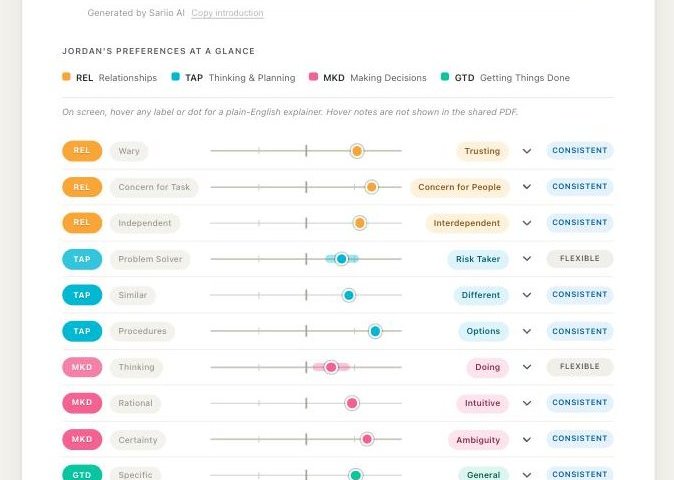
Open the live myMAP ↗ (opens in new tab)
Where one person sits on twelve preferences - and AI commentary on what that means for managing, coaching and working with them.
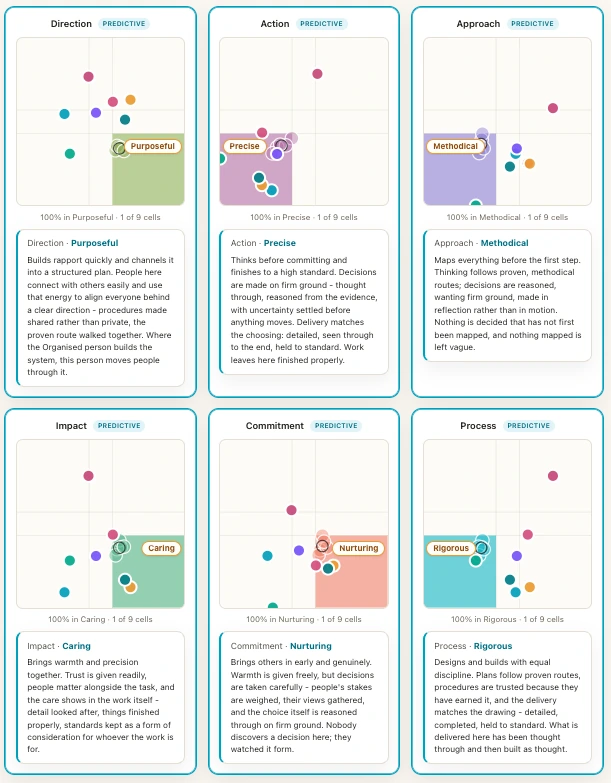
Open the live successMAP ↗ (opens in new tab)
The preference profile of the people who already succeed in a role, with a clear picture of how closely each candidate's preferences match it - and where they differ. Similarity is not a merit ranking or a prediction of suitability. People should consider skills, experience, context and fair hiring practice. No automated screening.
Open the live teamMAP ↗ (opens in new tab)
See where reported work preferences are similar or different across a team. Use those patterns to ask people about onboarding, handovers and the work they share.
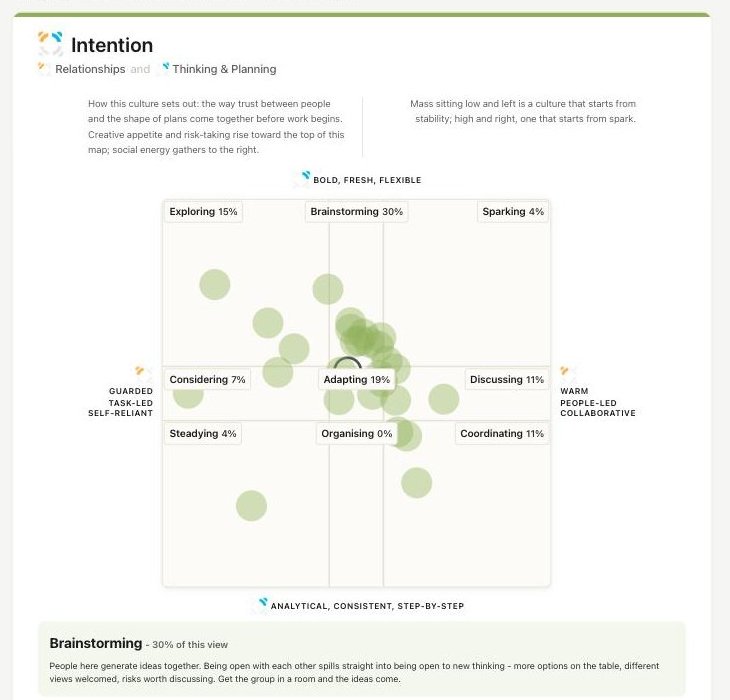
Open the live cultureMAP ↗ (opens in new tab)
An organisation view of reported work preferences. Discuss the patterns with teams alongside other evidence about their work. The sample is an anonymised client map.
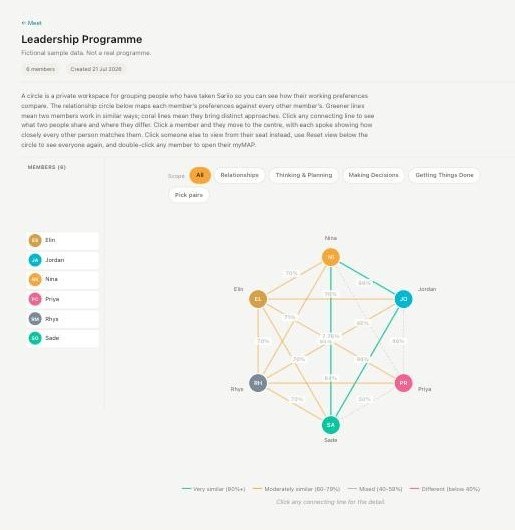
A group built from anyone with survey results - a project team, a cohort, a leadership programme. See each agreed comparison in one place, with commentary to help people discuss similarities and differences. Open the live CircleMAPS report (opens in new tab)
Twelve minutes per person
Sixty statements answered on sliders - no tick-boxes, because how you prefer to work is a position on a spectrum, not a yes or a no. No training courses, no workshops, no consultants needed to run it. And nothing that judges: a MAPs report describes how someone prefers to work, never how good they are - no types, no grades, no verdicts on ability. People read the maps and recognise themselves.
AI guidance with human review
What the AI helps with. Sariio uses AI to explain preference results in plain language and help people prepare questions for a conversation. Ask Sariio can provide guidance about a shared report or comparison. The person and their colleagues decide what fits their situation and what to try.
How to use it responsibly. AI commentary should be checked against the person’s own experience and the situation at work. It does not decide who to hire or how to manage someone. The current governance position on hosting, privacy and AI is set out in the trust & AI governance declaration.
The platform runs on its own
You can start with your own survey and decide who to invite. For an organisation or client programme, discuss the people involved, the work you want to support and how you will review progress.
Want to try the survey first? Take the survey yourself (opens in new tab) Discuss your requirements