 sariio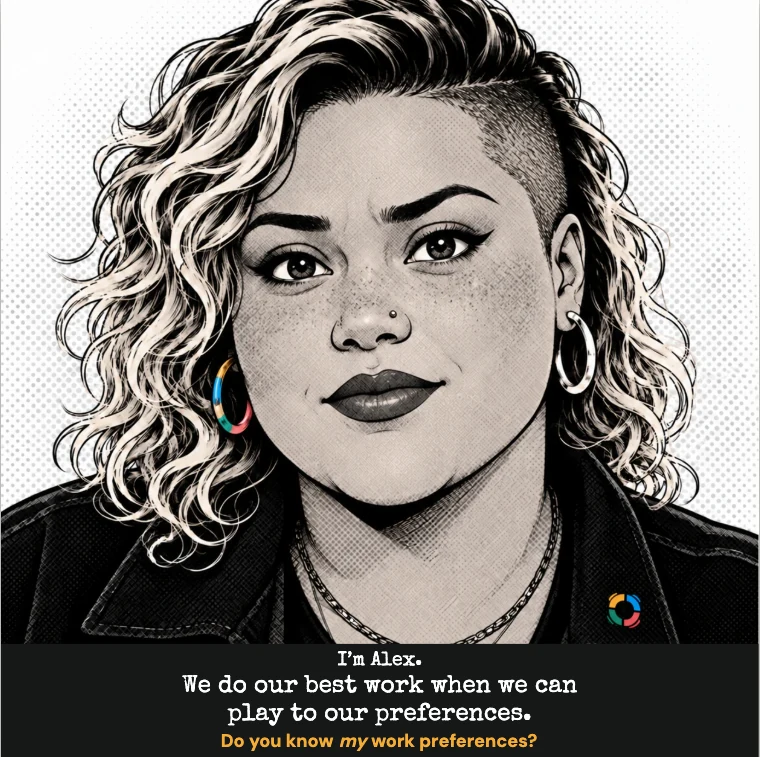
Why It Takes AI to Keep the Human at the Centre of the Contact Centre
- The replacement experiment has been run in public and the sector has changed its mind: Gartner finds 95% of service leaders keeping human agents, only 20% have cut staffing because of AI, and Klarna rehired people after judging AI-only service lower in quality.
- Customers can tell the difference between AI that solves a problem and AI that cuts a cost: nearly one in five say AI support brought them no benefit at all, four times the failure rate of other uses.
- The human experience is decided by the manager (70% of the variation in team engagement, says Gallup), and most first-year leavers go inside ninety days, before the manager knows them.
- The irony: the missing piece is an AI layer whose only job is to know the person, so the manager coaches each agent the way that agent receives feedback. The AI prepares, the human decides, and both experiences improve together.
Who wins when the contact centre fills up with agents of both kinds? The customer, if we're careful. The person in the chair, only if someone is paying attention.
For two years the argument about AI in customer service has been an argument about replacement. Can a model answer the call, close the ticket and cost less than the person who used to do the work? The sector has now tested that question at scale, in public, with every incentive to make the answer yes. The answer that came back is more interesting than either camp expected, and it points at a gap the sector has barely noticed. The most human part of the operation, the conversation between a team leader and an agent about one call, has had no tool built around the person in the chair. The layer which fixes that, as the rest of this piece sets out, is itself AI.
This piece sets out what the evidence says about human in the loop, about HX and CX as two halves of one experience, and about why an AI whose only job is to know the person turns out to be the piece that keeps the person at the centre.
What is HX in a contact centre?
HX, the human experience, is the experience of the people who do the work, in the same sense that CX is the experience of the customers they serve. In a contact centre HX is shaped most by the team leader: Gallup attributes 70 per cent of the variation in team engagement to the manager, and only 16 per cent of employees call their last conversation with their manager meaningful. The sector's own research puts most first-year leavers inside the first ninety days, which is the window in which HX is decided.
CX, the customer experience, needs no introduction in this sector; every operation measures it. HX, the human experience, is the same idea turned round: the experience of the people who do the work, from the first day on the floor to the conversation that decides whether they remain. The two are not separate. An agent who feels understood and coached in a way that fits them handles the next difficult call with more confidence, and the customer on that call feels the difference. An agent who feels scored and processed is more likely to be among the leavers the sector records inside the first ninety days (COPC, 2024), and the customer meets a new starter instead.
The replacement experiment has already been run
What does human in the loop mean for customer service?
Human in the loop means a person reviews, changes and endorses what an AI system proposes before anything reaches a customer or a colleague. In customer service the evidence has moved firmly that way: Gartner found 95 per cent of service leaders planning to keep human agents, predicts half of the organisations that planned deep workforce cuts will abandon them by 2027, and Klarna rehired human agents in 2025 after judging its AI-only service lower in quality. The same principle applies to coaching: the AI prepares, the manager decides.
Start with the strongest evidence, which the sector has been generous enough to produce.
In February 2024 Klarna said its AI assistant was doing the work of 700 customer service agents. By May 2025 its chief executive was telling Bloomberg that the company was hiring humans again, that cost had weighed too heavily in the decision and that the result had been lower quality, and that "there will always be a human if you want" (Entrepreneur, 2025). Klarna is one company, and one that moved early and loudly. But the surveys say the same thing more quietly.
Gartner polled 163 customer service leaders in March 2025 and found 95 per cent planning to keep human agents, under a banner Gartner called "digital first, but not digital only". The same release predicted that by 2027 half of the organisations that expected to cut their service workforce significantly will have abandoned the plan (Gartner, 2025). Kathy Ross, quoted in the release, put the reason plainly: a hybrid approach, with AI and human agents working in tandem, is the most effective strategy.
By October 2025 the picture had firmed up. Of 321 leaders surveyed, only 20 per cent said they had reduced agent staffing because of AI, 55 per cent reported stable staffing while handling higher volumes, and 42 per cent were hiring for AI roles (Gartner, 2025). Two weeks later Gartner's chief of research for the practice set out the 2026 agenda, and the headline, rather than automation, was "preparing agents to deliver higher-value, more complex, and empathetic customer interactions": 84 per cent of leaders adding new skills to agent profiles, nearly 80 per cent moving agents into new positions (Gartner, 2025). By April 2026, 85 per cent of service and support leaders were expanding human agent responsibilities (Gartner, 2026).
So the human remains. The question the sector is now asking is the better one: what are the humans for, and what do they need to do that work well?
Customers can tell the difference
Here is where CX comes in, and where the evidence turns uncomfortable for a cost-led case.
Qualtrics surveyed 20,000 consumers across 14 countries for its 2026 trends report. Use of AI for daily tasks is rising, and comfort with AI has improved (Forbes, 2025). Yet nearly one in five consumers said AI in customer support had brought them no benefit at all, a failure rate four times higher than other applications of the technology. Isabelle Zdatny of the XM Institute drew the conclusion: "Too many companies are deploying AI to cut costs, not solve problems, and customers can tell the difference" (Forbes, 2025).
That finding rhymes with the earlier one, from Gartner's survey of 5,728 customers, in which 64 per cent would prefer companies did not use AI in customer service at all, and 53 per cent would consider switching to a competitor that planned to (Gartner, 2024). I covered that survey in the piece on whether AI can replace an agent; the point here is different. Customers accept the technology and reject the intent behind one use of the technology, and they read that intent through a chat window.
Customers accept the technology and reject the intent behind one use of the technology, and they read that intent through a chat window.
The field evidence says what the better intent looks like. When Brynjolfsson, Li and Raymond tracked 5,172 support agents at a software firm as a generative AI assistant was introduced, issues resolved per hour rose 13.8 per cent on average, the newest agents improved by around 35 per cent, and agent turnover fell by 8.6 points (Quarterly Journal of Economics, 2025). The AI sat behind the agent, not in front of the customer, and made the person better at the job and more likely to remain in the job. CX and HX moved together, because the technology was pointed at the human rather than past them.
The learning gap, and why coaching has one too
Why do AI pilots fail in contact centres?
MIT's 2025 GenAI Divide study found 95 per cent of enterprise generative AI pilots delivered no measurable return, and put the cause down to a learning gap: tools that do not learn the organisation's workflows or retain context. The same gap exists in coaching. Feedback that does not learn the person lands the same way for everyone, which is why Qualtrics found nearly one in five consumers saw no benefit from AI in customer support, and why the fix is a layer that learns the person, not another dashboard.
MIT's NANDA initiative published the bleakest number of 2025: 95 per cent of enterprise generative AI pilots produced no measurable return. The report's authors did not blame the models. They named a learning gap: generic tools work for individuals because they're flexible, and stall inside organisations because they don't learn the workflows, retain the context or adapt to the people using them (Fortune, 2025). Tools bought from specialist vendors succeeded about twice as often as tools built in-house (Fortune, 2025), a finding about focus as much as about engineering.
Coaching has the same gap, and for the same reason: the tool does not learn the person. Hold the MIT finding against the way coaching is usually arranged. A team leader has a roster of agents, a few minutes for each, and a scorecard that says what the call needed. The feedback that comes out of that arrangement is accurate and uniform, and the feedback does not learn the person. The same note lands on the agent who wants the exact moment and the evidence, and on the agent who needs the picture first and the detail afterwards, and the note lands differently on each of them, and the manager often learns which was which too late.
Gallup has measured the gap from the employee's side. Only 16 per cent of employees say their last conversation with their manager was meaningful, while 80 per cent of those who received meaningful feedback in the past week are fully engaged; what makes the conversation meaningful, in the order people rank the topics, is appreciation for recent work, relationships, goals and the person's strengths, with weaknesses rated least (Gallup, 2026). Gallup also puts 70 per cent of the variation in team engagement down to the manager (Gallup, 2015), and records managers as the least engaged group in its 2026 report, at 22 per cent worldwide (Gallup, 2026).
So the human experience in a contact centre runs through one overloaded person, and the conversations that experience depends on are, by the employees' own account, mostly not meaningful. That is the learning gap in human form.
The ninety days where HX is decided
The cost of that gap has a timetable. COPC's benchmarking puts around 70 per cent of a contact centre's first-year attrition inside the first ninety days (COPC, 2024), and SQM Group reports the same pattern across the centres it surveys, with most agents who leave going inside three months (SQM Group, 2023). Gallup's exit research adds the detail that matters: 52 per cent of people who left voluntarily say their manager or organisation had a way to keep them, and 51 per cent say that in their last three months neither their manager nor any other leader spoke with them about their future (Gallup, 2019). For an agent who leaves at week ten, those three months were the whole employment.
In South Africa the stakes are higher still, because the sector added 26,346 jobs in 2025 and around 90 per cent went to young people (BPESA, 2025), in a country where Gallup records 18 per cent of employees engaged (Gallup, 2026). For a large share of those agents the first ninety days on the floor are their first ninety days in the sector, and for some the first in any job. I wrote about the pattern in why new agents leave in the first ninety days; the conclusion holds, and the window for being understood closes fast.
Be curious, not judgemental: the research behind the catchphrase
There is a reason the sector keeps reaching for Ted Lasso, and it is not the moustache. Heather Cairns-Lee at IMD traced the show's leadership ideas back to the literature and found most of them standing up: a 2022 paper in Organizational Behavior and Human Decision Processes showing that curious leaders make people safer to speak up, work in the Journal of Leadership Studies linking leader humility to psychological safety, and the long line of research on expectation effects, in which what a leader believes about a person shapes what that person achieves (IMD, 2026). Her summary of the Lasso method is a line any team leader can use: the leader's job is to make the room smarter, and that starts with asking questions you can't yet answer.
Curiosity, though, needs material. A team leader with a full roster cannot be curious about each agent from a standing start every week. The curiosity has to be prepared, and preparing curiosity is a job no tool on the floor has taken on.
The missing layer is an AI that knows the person
Can AI make coaching more human?
Yes, when the AI is used to know the person rather than to replace the conversation. A field study of 5,172 agents found an AI assistant lifted resolved issues per hour by 13.8 per cent, with the largest gains among the newest agents, and cut turnover by 8.6 points. Coaching prepared from the record of the call and the agent's own work preferences gives the manager minutes of preparation instead of the best part of an hour, so each agent hears from the manager weekly in a way that fits how that agent receives feedback.
Call recording, speech analytics and QA scoring read the call, and they read the call well: what happened, and whether the standard was met. The agent who was on the call is a different question: what this person does well, how this person receives feedback, whether the moment worth revisiting is best sent ahead or raised in the room. That knowledge is a layer in the operation's own right, and the layer sits between the score and the person in the chair.
Here is the irony in full. The piece of AI that keeps the human at the centre of the operation answers no customer. That piece has one job, to know the agent and to prepare the manager's conversation around that knowledge, so that the five minutes the manager has become five minutes about this person rather than five minutes of checklist. The machine does the preparation precisely so that the human can do the human part.
Human in the loop, in this arrangement, is the design rather than a safeguard added afterwards. The AI reads the record of the call alongside the campaign standard and the agent's work preferences, drafts a short note with the moment worth revisiting and one action to adopt, and suggests how to open with this particular person. The manager reads the note, changes what needs changing and endorses the note before anything reaches the agent. The standard remains the campaign's; a preference changes no score. The judgement and the conversation remain the manager's. What changes is that the manager walks in already knowing the person, which is the ground on which Gallup's respondents call a conversation meaningful: recent work, the relationship and the person's strengths.
The machine does the preparation precisely so that the human can do the human part.
This is the layer Sariio adds. A map of each agent's work preferences, drawn from a twelve-minute survey the agent retakes as the months pass and reads before anyone else sees the map, sits beside the transcript or scorecard the operation chooses to send. From the transcript or scorecard, Sariio prepares the coaching note for the manager, in the shape that fits the agent, and the manager coaches. Nothing the operation runs today changes; the layer sits beside everything already running. The book behind Sariio follows one agent, Alex, through exactly this arrangement: her survey results are real, her name is not, and the first spreads are online.
What changes for CX and HX together
Put the two halves back together and the evidence above says what changes for each party.
For the agent, HX changes from being scored to being understood. The first weekly conversation happens in week one, prepared around what the new starter does well and how they receive feedback, which is the manager's active part that Gallup finds makes people 3.4 times as likely to call their onboarding a success (Gallup, 2021). The ninety days in which most leavers go become ninety days in which someone who knows how this agent works is coaching them.
For the customer, CX changes because the agent on the next call has been coached as a person, which is the intent Zdatny found customers can read.
For the operation, the measures are familiar ones: time to feedback and how many agents hear from their manager each week, the QA or customer measure the campaign most wants to move, the share of each intake still on the floor at day ninety, and, asked directly, whether agents and managers call the coaching fair and useful.
So who wins when the contact centre fills up with agents of both kinds? Both experiences can, if the AI we point at the floor is pointed at the person. The replacement experiment is over and the humans remained. What they need now is a manager who knows them, and the most human thing a machine can do in this sector is make that possible.
The companion pieces: the replacement evidence in full is in can AI replace a call centre agent; the first ninety days are in why new call centre agents leave in the first 90 days; and the twelve beliefs behind this piece are in twelve things we believe about ourselves and work.
Sources
- Gartner (2025), 'Gartner predicts 50% of organizations will abandon plans to reduce customer service workforce due to AI' - the 2027 prediction, 95% of 163 leaders keeping human agents, Kathy Ross on the hybrid approach
- Gartner (2025), 'Gartner survey finds only 20% of customer service leaders report AI-driven headcount reduction' - 321 leaders, October 2025; 20% reduced staffing, 55% stable, 42% hiring AI roles
- Gartner (2025), 'Customer service and support leaders must prioritize blending human strengths with AI intelligence in 2026' - the 2026 agenda; 84% adding skills, nearly 80% moving agents into new positions
- Gartner (2026), '85% of service and support leaders are expanding human agent responsibilities'
- Gartner (2024), '64% of customers would prefer that companies didn't use AI for customer service' - 5,728 customers; 64% and 53%
- Entrepreneur (2025), 'Klarna is hiring customer service agents after AI couldn't cut it on calls' - reporting Sebastian Siemiatkowski's Bloomberg interview; the 700-agent claim of February 2024 and the 2025 reversal
- Forbes (2025), 'AI customer experience is booming, but it's failing consumers' - reporting the Qualtrics 2026 Consumer Experience Trends Report (20,000 consumers, 14 countries); the one-in-five figure and Isabelle Zdatny's quote
- Brynjolfsson, E., Li, D. & Raymond, L. (2025), 'Generative AI at Work', Quarterly Journal of Economics 140(2) - the 5,172-agent field study; 13.8%, ~35% for novices, turnover down 8.6 points
- Fortune (2025), 'MIT report: 95% of generative AI pilots at companies are failing' - reporting MIT NANDA, The GenAI Divide: State of AI in Business 2025; the learning gap
- Gallup (2026), 'The great manager's most important habit' - 80% and 16%; the ranking of what makes feedback meaningful
- Gallup (2015), 'Managers account for 70% of variance in employee engagement'
- Gallup (2026), 'State of the Global Workplace 2026' - 20% of employees and 22% of managers engaged; South Africa country data, 18%
- Gallup (2021), 'Practices for better employee onboarding' - 3.4 times when the manager takes an active part
- Gallup (2019), 'This fixable problem costs US businesses $1 trillion' - 52% and 51%
- COPC (2024), 'Onboarding best practices: reducing attrition in the first 90 days' - ~70% of first-year attrition inside 90 days
- SQM Group (2023), 'Call centre attrition rate' - most leavers inside 90 days
- BPESA (2025), 'Business services job opportunities on the rise' - 26,346 jobs in 2025, ~90% to young people
- Cairns-Lee, H. (2026), 'Believe: what Ted Lasso gets right about leadership', I by IMD - the research behind curiosity, humility, psychological safety and expectation effects